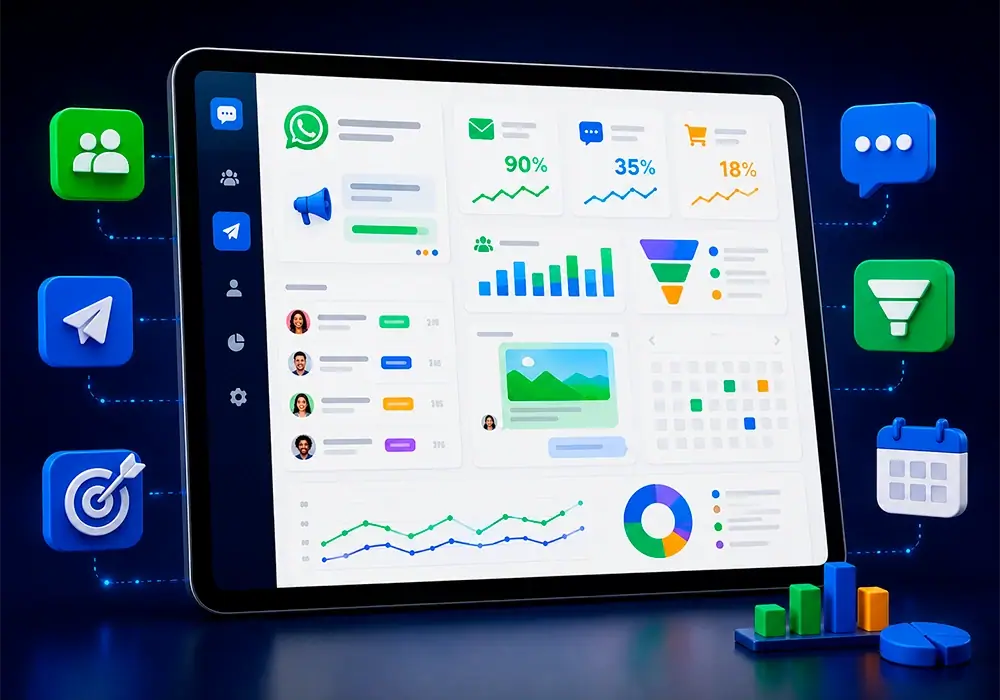
WhatsApp campaigns routinely outperform email and SMS on open rates—but only when they respect opt-in, relevance, and Meta’s messaging policies. Blast messages to your entire contact list and you risk complaints, blocks, and damaged brand trust. A focused campaign strategy turns WhatsApp into your most efficient retention and conversion channel.
Segment before you send
Not every contact should receive the same message. Segment by:
- Funnel stage (lead, active customer, dormant)
- Product or service interest
- Last recorded interaction or purchase date
- Region, language, or account type
whapi.chat lets you import lists, apply tags, and launch campaigns to specific groups from one dashboard—so each audience gets copy that actually applies to them.
Templates and personalization
Use dynamic variables: first name, company, plan renewal date, or order ID. “Hi Sarah, your plan renews on March 15” outperforms generic promotional text because it signals you know who they are.
For proactive outreach, use approved message templates where required, and keep promotional density low. Mix value (tips, reminders, service updates) with offers so subscribers stay engaged.
Metrics that matter
- Delivery rate: Did the message reach the device?
- Read rate: Did they open it?
- Reply rate: Did it start a conversation?
- Conversions: Did it lead to a sale, booking, or renewal?
Track these per segment in whapi.chat and double down on what works; pause what does not.
Common mistakes to avoid
Do not message contacts without explicit opt-in. Avoid aggressive discount language in every send. Never launch to your full list without a pilot to 50–100 contacts first. Skip sending during local night hours unless the content is truly urgent.
Build a repeatable campaign calendar
Plan monthly themes: onboarding week, renewal reminders, product education, and one promotional window. Consistency builds trust; random bursts feel like spam.
Timing and frequency
Send when your audience is likely to read, not when your marketing calendar says “blast.” For B2B, mid-morning on business days often works; for retail, early evening can perform better. Cap promotional sends to one or two per month per segment unless the user explicitly opted into daily deals.
whapi.chat scheduling lets you queue campaigns across time zones and pause instantly if a product sells out or a policy changes.
Connect campaigns to sales follow-up
When someone replies to a campaign, route the thread to the right agent with tags inherited from the campaign name. Supervisors see which creative drove the conversation and can attribute revenue without spreadsheets.
A well-planned WhatsApp campaign respects the inbox, delivers value, and converts—especially when whapi.chat connects campaigns to your CRM so replies become tracked opportunities, not lost chats.